
The September Stink: Why Your Yard Smells Worse in a Heatwave—and Where the Smell Is Really Hiding
The calendar says September. Your backyard says City Dump.
You open the door, take one breath, and immediately wonder what your dog has been doing out there. The answer may be obvious—but the source of the smell is not always the pile sitting in plain sight.
Heat does not create backyard odor. It turns up the volume on odor that is already there. And in a dog’s yard, that odor usually has three addresses: a missed pile, a favorite pee spot, or the place where the poop goes after you scoop it. At PooPail, we offer a solution to reducing or eliminating backyard pet waste and odor with just a flick of the wrist.
Here is how to find the real culprit and shut down the Great September Stink before it takes over the patio.
What Heat Actually Does to Dog-Waste Odor
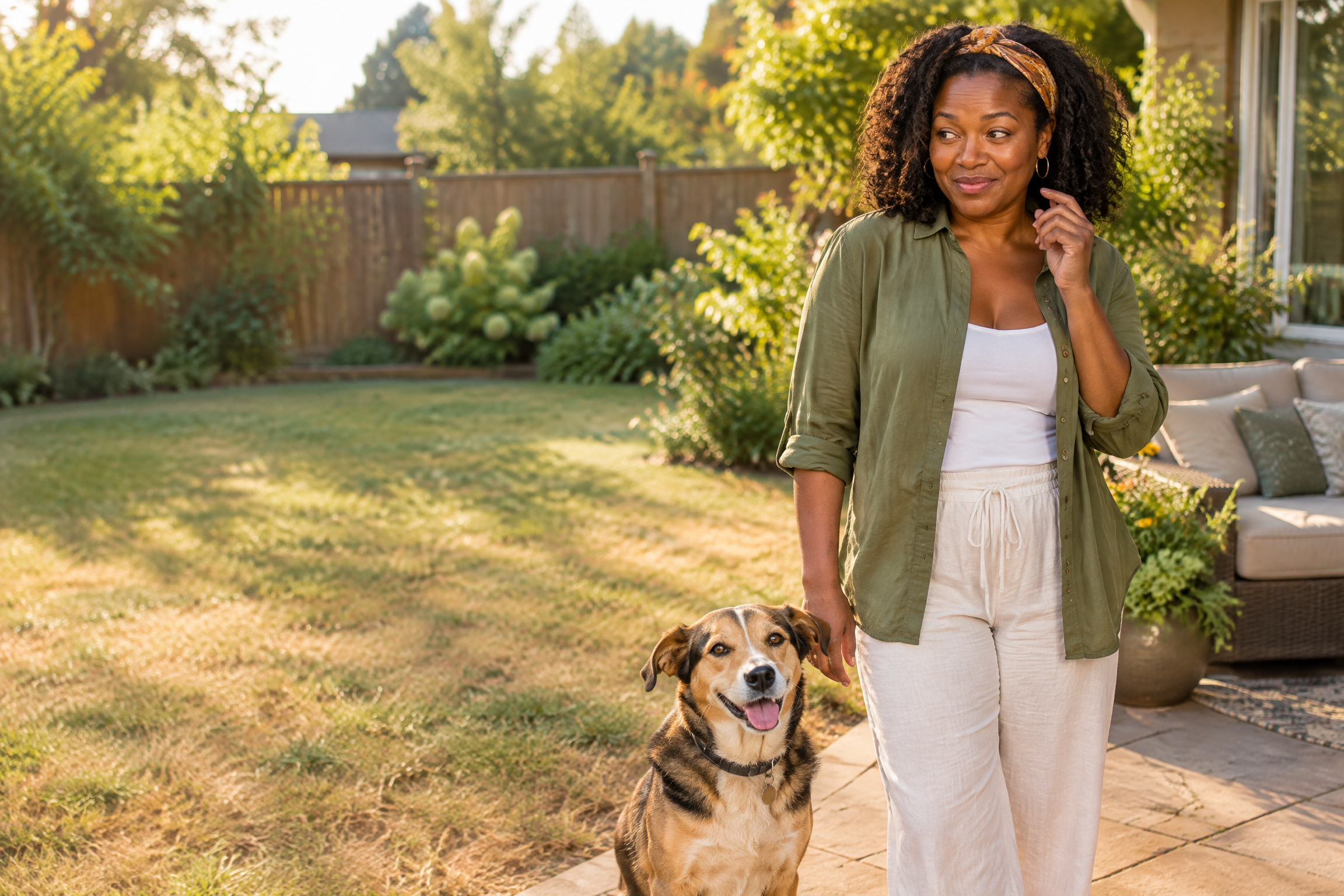
Dog waste already contains plenty of smelly compounds. When temperatures rise, more of those compounds can become airborne, which makes them easier for your nose to detect. Warm conditions can also speed microbial activity while enough moisture is present, creating more odor as organic material breaks down.
Moisture is the important accomplice. Humidity, irrigation, or a quick rain can keep waste and urine-soaked areas damp—or re-wet residue that had started to dry—allowing the smell to hang around. A pile baking in bone-dry sun may eventually dry out, so “heat makes poop decompose faster” is only part of the story. The more accurate version is this:
Heat makes odor easier to release and notice; moisture and old residue help keep it going.
That is why a hot, muggy afternoon can produce a much bigger stink than the amount of visible poop seems to justify.
Backyard Odor Has Three Addresses
1. The pile you missed
Tall grass, fence lines, shrubs, and shaded corners are excellent hiding places. They are also the areas most likely to stay damp after the rest of the yard dries.
This is where regular mowing does more than make the lawn look tidy. Shorter grass makes waste easier to spot and opens up dense areas where moisture tends to linger. Pay particular attention to your dog’s usual route along the fence and that one mysterious corner they visit with great purpose.
Warm weather also makes forgotten waste more attractive to flies. Every day a pile stays in the yard is another day it can smell, soften after watering, or become a neighborhood fly destination.
2. The favorite pee spot
If the yard smells even after every pile is gone, look down. A dog that returns to the same patch of dirt, grass, gravel, or artificial turf can leave behind concentrated urine residue.
On a living lawn, urine can also overload one small area with nitrogen-containing compounds and salts. If you are trying to protect the grass, Colorado State University Extension recommends water for dilution, not baking soda, gypsum, or other homemade “neutralizers” that may add even more salts.
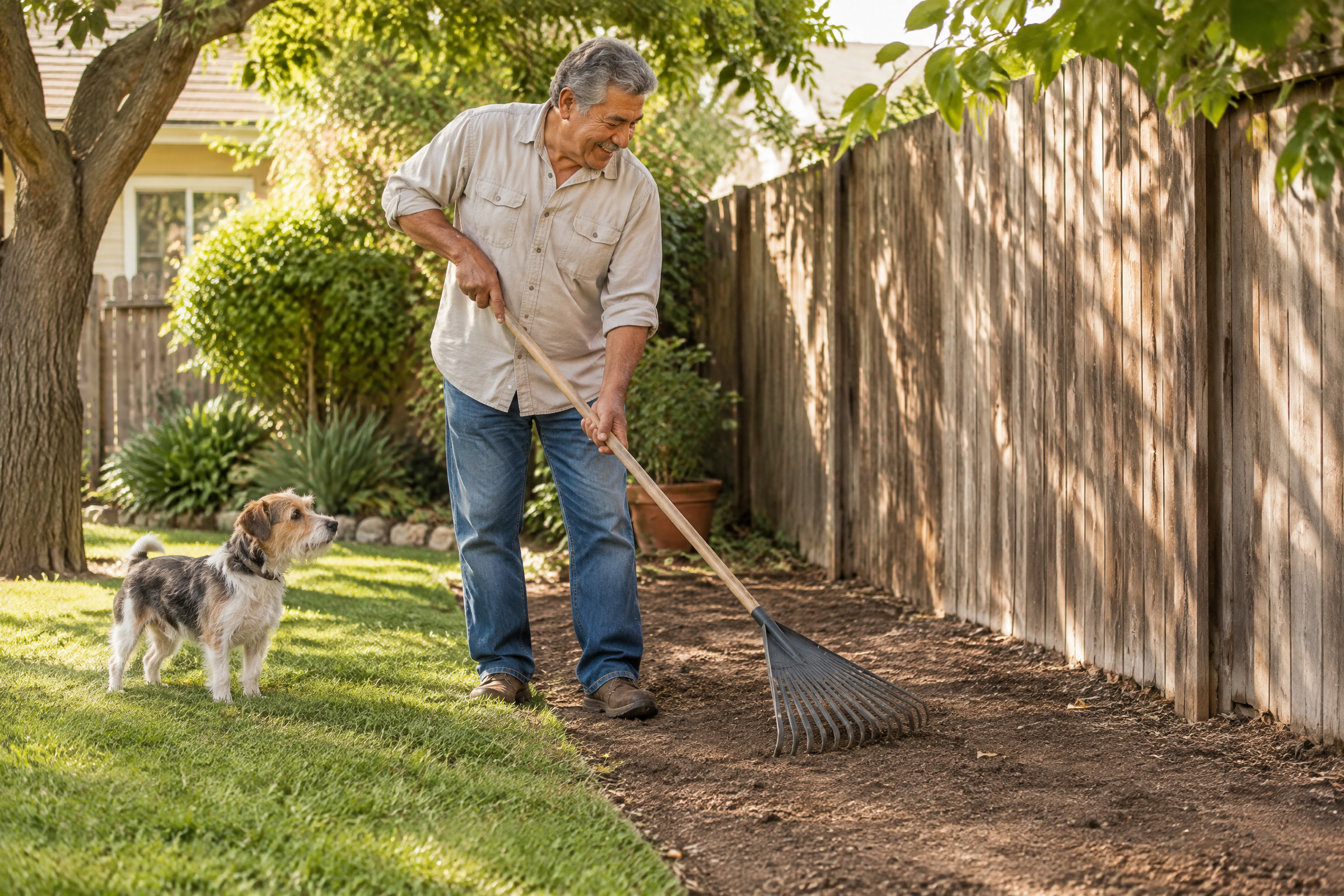
For bare, high-traffic dirt patches, rake or lightly turn the top layer occasionally. Breaking up compacted soil exposes damp soil to more air and can improve drainage and drying. It is maintenance, not magic: do not turn feces into the ground, and do not create runoff by flooding the area.
Keep grass trimmed around fence lines and shaded corners, too. The point is not that short grass somehow neutralizes urine. It simply makes missed waste easier to find and helps prevent a dense, damp potty zone from developing.
3. The poop after you scoop it
Sometimes the yard is clean and the smell is coming from the bag you proudly picked up yesterday.
A tied bag sitting in an open bucket, beside the back door, or inside a hot household trash can is still a bag of poop sitting in the heat. If disposal is inconvenient, bags also have a funny way of collecting in temporary places that become permanent odor problems.
This is the part most cleanup advice skips: the job is not finished when the poop leaves the grass. It is finished when the waste is contained.
The Heatwave Reset
You do not need to deodorize the entire property. You need a fast routine that targets the places where odor starts.
Walk the yard during the cooler part of the day. Early morning or evening is more comfortable for you and makes it easier to turn cleanup into a daily habit during a hot spell.
Check the repeat-offender zones first. Start along fence lines, behind shrubs, near the gate, and wherever your dog usually circles before committing to a spot.
Scoop today’s poop today. “Later” is how one small pile becomes tomorrow’s smell. For multi-dog households or compact yards, a quick daily pass is especially worthwhile.
Maintain the surface underneath. Trim overgrown grass. Lightly rake compacted bare patches from time to time. If urine is affecting live grass, use plain water to dilute it where local watering conditions allow.
Finish at the storage point. Make sure the waste is not simply moving from the lawn to an uncovered container that smells every time the sun hits it.
A Quick Note for Artificial Turf
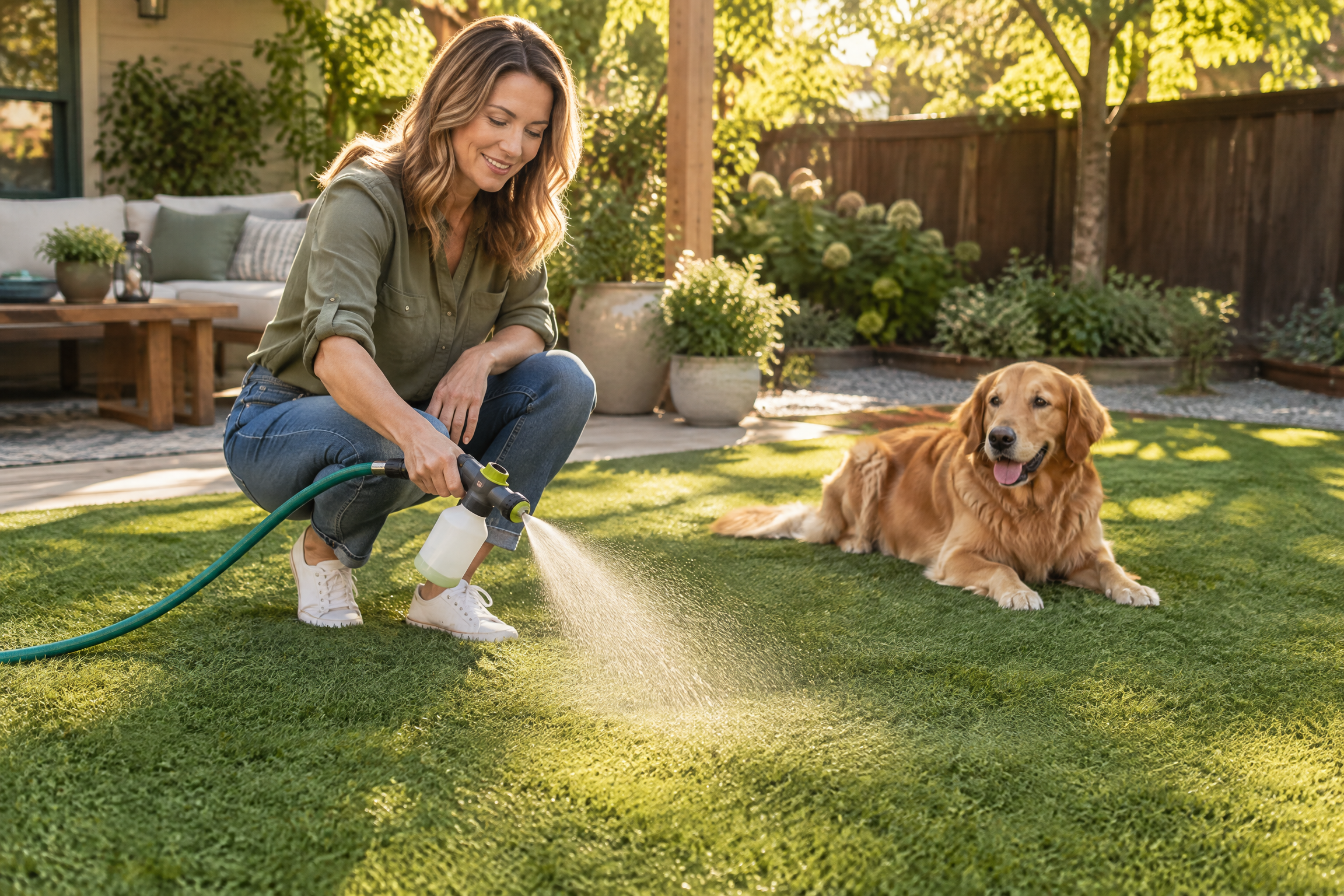
Artificial turf deserves its own short note because the problem is usually urine residue, not hidden poop.
If the solids are gone but the smell remains, try an outdoor pet-odor product such as Pooph, or look for another product designed to do the same job. Pooph has worked extremely well. Simply add it to a yard sprayer, such as those used for Miracle-Gro. Whatever you choose, follow the product label and your turf manufacturer’s care instructions.
The larger point is simple: stop searching for another pile. The surface itself may need attention.
The Best Odor-Control System Is the One You Will Use Today
Most dog parents do not need more information about why poop should be picked up. They need a setup that makes picking it up now easier than putting it off.
That is where PooPail fits. It combines a long-handled scooper with a four-gallon outdoor waste container, so the pickup tool and the disposal point are already together. Its lid is designed to help contain odor, keep out flies and water, and hold up to a week’s worth of waste between trash days.
No hunt for the scoop. No parade through the kitchen carrying a poop bag. No temporary open bucket quietly becoming the smelliest object in the yard.
Because the real secret to a fresher backyard is not a complicated cleaning ritual. It is removing the waste before heat, moisture, and procrastination get a chance to collaborate.
The September Rule
When summer refuses to leave, remember:
Find the pile. Check the pee spot. Contain what you scoop.
Your backyard does not need an air freshener. It needs fewer places for odor to hide.
References
[1] Why Dog Poop Smells Worse in Summertime
[2] How Heat Affects Pet Waste Odors in Yards
[3] Dog Urine Damage on Lawns: Causes, Cures, and Prevention
[4] PooPail: The World’s First 2-in-1 Solution to Backyard Dog Poo

Facebook
Instagram
Youtube